· CANNORYX B2B Team · Documentation · 7 min read
Wholesale CBD Distillate — What B2B Buyers Should Check Before They Inquire
A procurement checklist for verified B2B buyers assessing wholesale CBD distillate, documentation needs, destination review, and inquiry requirements.
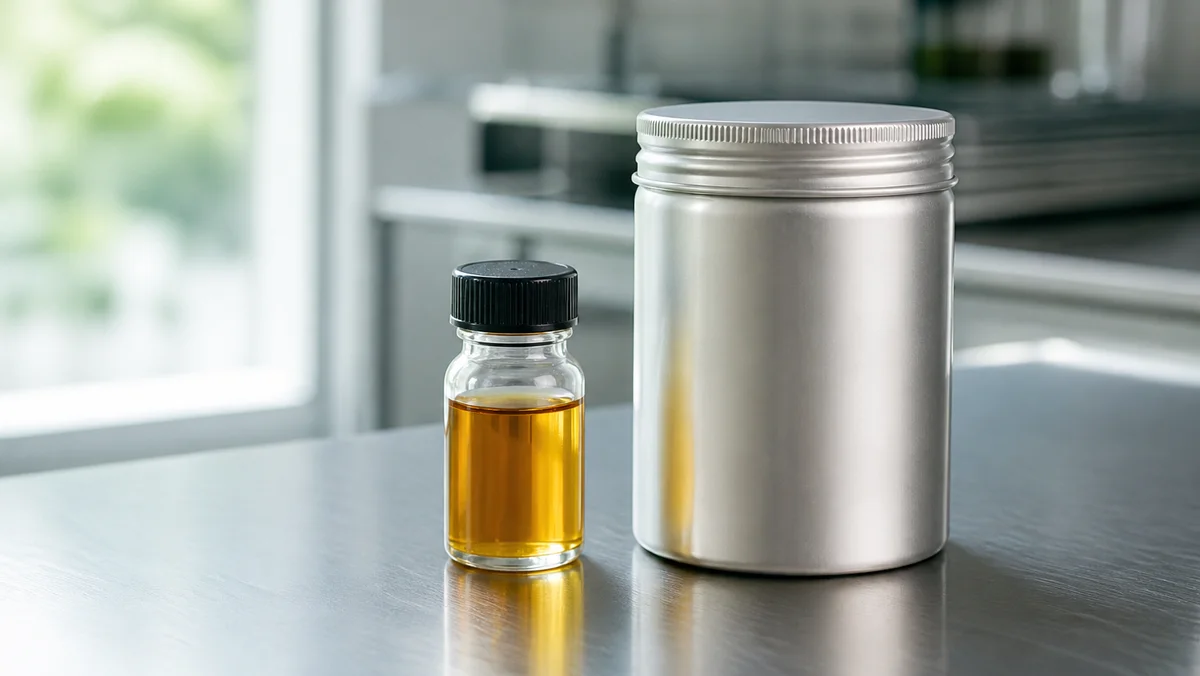
Sourcing wholesale CBD distillate starts before a buyer asks for pricing. Formulators, private-label brands, distributors, and procurement teams should define the requested category, intended commercial process, target destination, expected volume, and documentation scope.
CANNORYX supplies cannabinoid categories through a verified B2B inquiry process. There are no consumer sales or consumer-use instructions. Wholesale information may be shared after business verification, destination review, and category-specific documentation checks.
For buyers evaluating full-spectrum CBD distillate, the following checklist can help structure an inquiry and identify information that still needs to be confirmed.
1) Confirm that the requested category matches the project
“CBD distillate” should not be the only product detail in a commercial request. Buyers should identify the specific distillate category they want CANNORYX to review.
The available product pages distinguish between full-spectrum and semi-spectrum CBD distillate. A buyer should state which category is being requested rather than using the terms interchangeably.
Before contacting the supplier, record:
- Requested CBD distillate category
- Intended manufacturing or filling process
- Required destination country
- Expected order volume
- Required documentation
- Buyer-defined specification criteria
- Preferred packaging or delivery format (confirm with supplier)
- Desired purchasing schedule (confirm with supplier)
CANNORYX positions CBD distillates as wholesale resources for manufacturing and filling processes. Distillate categories support B2B buyers seeking production inputs and documentation pathways. Project-specific suitability should not be assumed from a category name or product page alone.
Any required format or process criteria should be included in the inquiry and checked against applicable documentation.
2) Prepare complete company information
CANNORYX handles verified B2B inquiries only. A request should make it possible to identify the business and understand its role in the proposed transaction.
Useful company details include:
- Registered company name
- Company website
- Business address
- Contact person and business email
- Buyer type, such as formulator, private-label brand, distributor, or procurement organization
- Destination country
- Requested product category
- Expected volume
- Required documentation scope
Buyer verification may be required before certain documentation or commercial details are shared. Providing complete information at the start can support the review process, although it does not guarantee product availability, acceptance of an order, or access to every requested document.
An inquiry that says only “send CBD prices” leaves several essential questions unanswered. A stronger request identifies the company, destination, category, and expected commercial requirement.
3) Identify the target market before requesting availability
Availability is destination-dependent. CANNORYX reviews wholesale requests according to the destination country, applicable regulations, documentation requirements, and buyer verification.
Some cannabinoid categories may be restricted or unavailable in certain markets. A product’s appearance in a B2B catalog should not be interpreted as confirmation that it can be supplied to every country.
Each inquiry should clearly identify:
- The destination country
- Any additional destination involved in distribution
- The buyer’s commercial role
- The requested category
- The documentation expected for the buyer’s review
Independent legal and regulatory review in the target market remains the buyer’s responsibility. CANNORYX does not guarantee that a product is legal, registrable, marketable, or suitable for a particular jurisdiction. Documentation also does not replace the buyer’s own legal and regulatory assessment.
If the transaction involves multiple markets, each destination should be disclosed for review. Buyers should not assume that a category reviewed for one destination will also be available for another.
4) Define the documentation scope
Documentation-led communication is part of CANNORYX’s B2B process. Documentation, including a certificate of analysis where applicable, may be shared on request after buyer verification.
Buyers can review the general certificates and CoA information page before submitting their request. The precise documentation available may depend on the relevant category, request, and verification status.
A procurement inquiry should specify whether the buyer is requesting:
- A certificate of analysis, where applicable
- Category-level documentation
- Batch-related documentation (confirm availability)
- Manufacturing or quality-system documentation (confirm availability)
- Logistics-related documentation (confirm availability)
- Destination-specific supporting documents (confirm availability)
- Information required by the buyer’s internal approval process
Do not assume that a requested document is available until its status has been confirmed. Access to documentation should not be treated as proof that the product complies with every rule in the target market.
Where a project depends on a particular specification, the buyer should request relevant current documentation and assess it against internal requirements. No purity, potency, or content figure should be inferred without a referenced CoA or identified batch.
5) State expected volume and purchasing context
Expected volume is one of the details CANNORYX asks buyers to include in a commercial request. It gives the B2B team context for the inquiry and helps distinguish an active procurement project from a general catalog request.
The buyer should state:
- Expected initial order volume
- Expected recurring volume, if applicable
- Whether the request is for formulation, private-label production, distribution, or another commercial process
- Required ordering schedule (confirm with supplier)
- Forecast period (confirm with supplier)
Minimum order quantities, volume tiers, packaging configurations, and lead times should be confirmed directly in the inquiry.
Buyers seeking current commercial information can use the wholesale pricelist request page. Pricing and category information remain subject to destination review, documentation requirements, and buyer verification.
A pricelist request should still include the project details listed above. Current commercial information cannot by itself establish destination eligibility or confirm that a specific format is available.
6) Separate category selection from specification approval
A product category page is a starting point for discussion, not a substitute for specification review.
For example, choosing wholesale full-spectrum distillate identifies the requested category. It does not independently confirm:
- Category characteristics documented on a referenced CoA
- A specific potency or content figure
- Batch availability
- Packaging configuration
- Minimum order quantity
- Lead time
- Destination eligibility
- Project-specific manufacturing suitability
These points require confirmation through the applicable B2B process.
Procurement teams should document acceptance criteria before requesting a quote. Formulators should identify production requirements that need supplier confirmation. Distributors and private-label brands should define the documents required for internal and destination-market review.
CANNORYX supports category-level discussions for verified commercial buyers, but the buyer remains responsible for determining whether the reviewed product and documentation meet the project’s legal, technical, and commercial requirements.
7) Compare full-spectrum and semi-spectrum requests clearly
When evaluating CBD distillate wholesale options, buyers may need to compare full-spectrum and semi-spectrum categories. A detailed technical distinction requires current product documentation or direct supplier confirmation.
A comparison request should ask CANNORYX to confirm:
- The category definition used for each product
- Applicable current documentation
- Available batch information (confirm availability)
- Buyer-defined specification compatibility
- Destination-dependent availability
- Commercial format and packaging (confirm with supplier)
- Minimum order requirements (confirm with supplier)
Buyers should avoid relying on general market terminology, because the relevant purchasing decision depends on the supplier’s current category information and supporting documents.
If wholesale full spectrum distillate is required, name that category explicitly in the inquiry. If semi-spectrum distillate is also under consideration, list it as a separate requested category so that documentation status and availability can be reviewed independently.
8) Build an internal approval checklist
Before sending an inquiry, procurement teams can use a simple internal review:
Buyer identity
- Is the requesting legal entity identified?
- Is the company’s B2B role clear?
- Is a business contact provided?
Product request
- Is the exact distillate category named?
- Is the intended manufacturing or filling context explained?
- Are buyer-defined specifications listed?
Destination
- Is the destination country stated?
- Are all intended distribution markets disclosed?
- Has independent legal and regulatory review been assigned internally?
Documentation
- Is the required documentation scope listed?
- Has the buyer distinguished essential documents from optional requests?
- Is the team prepared to assess current documentation rather than rely on unreferenced figures?
Commercial scope
- Is expected volume included?
- Is the purchasing context clear?
- Are unanswered questions about pricing, packaging, lead time, or minimum quantities identified for follow-up?
This structure helps CANNORYX understand what the buyer is requesting and which details may require follow-up.
9) Use a procurement-ready inquiry format
A concise first request could follow this structure:
Company: [Registered company name and website]
Buyer type: [Formulator, private-label brand, distributor, or procurement organization]
Requested category: [Full-spectrum CBD distillate or semi-spectrum CBD distillate]
Destination country: [Country]
Commercial process: [Manufacturing, filling, distribution, or other B2B context]
Expected volume: [Initial and projected requirement]
Documentation requested: [List required documents, including CoA where applicable]
Specification criteria: [Buyer-defined requirements]
Commercial questions: [Pricing, packaging, minimum quantity, and lead time — confirmation required]
This format does not guarantee supply or document availability. It gives the B2B team the information needed to begin company, destination, and category review.
Final check before contacting CANNORYX
A well-prepared wholesale CBD distillate inquiry should answer five questions:
- Who is the verified commercial buyer?
- Which distillate category is being requested?
- Where is the product intended to go?
- What volume and commercial process are involved?
- Which documents and specification points need review?
CANNORYX works with verified distributors, brands, and commercial buyers through a B2B cannabinoid catalog. Availability depends on the destination country, applicable regulations, documentation requirements, and buyer verification. Documentation, including CoA material where applicable, may be provided on request after verification.
The buyer remains responsible for independent legal, regulatory, technical, and commercial review in every target market.
Next step for verified B2B buyers
- b2b
- wholesale
- distillates
- cbd
- documentation