
· CANNORYX B2B Team · Documentation · 8 min read
Wholesale CBG Distillate: Category Fit for Manufacturing Teams
Wholesale CBG distillate should be sourced against its documented composition, process history and formulation fit—not the category name alone. Use this procurement guide to structure supplier qualification, analytical review and pilot testing.
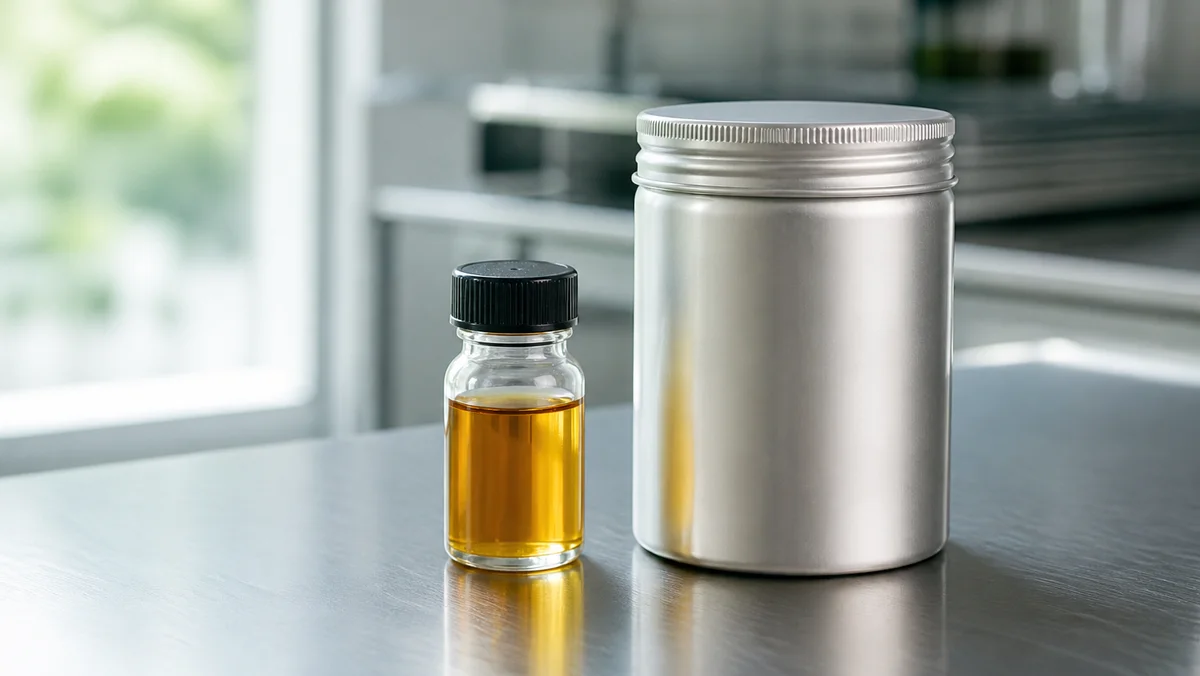
Buying wholesale CBG distillate is not simply a matter of comparing headline potency, price per kilogram and minimum order quantity. Manufacturing teams need to establish what the material contains, how it was processed, whether the analytical package is fit for purpose and how the lot behaves in the intended formulation.
That distinction matters because “distillate” is a category description, not a complete procurement specification. It does not disclose the cannabinoid profile, process aids, residual solvents, minor constituents, physical behavior or storage history of a particular lot.
A useful sourcing sequence is:
- Define the intended manufacturing role.
- Convert that role into a written material specification.
- Review lot-specific analytical and process documentation.
- Test the candidate lot at pilot scale.
- Set contractual controls for future deliveries.
This approach helps formulators, private-label brands and distributors assess CBG distillate as an industrial input rather than treating every supplier’s material as interchangeable.
Where CBG distillate may fit
CBG distillate may be relevant when a manufacturing team wants a concentrated cannabinoid input but does not require the narrow composition associated with an isolate. The decision depends on the formulation, target specification and permitted ingredient profile in the destination market.
Distillate and isolate should not be treated as different grades of the same material. They are different ingredient formats.
A distillate may contain CBG alongside other reported cannabinoids and process-related constituents. An isolate is generally selected when the buyer wants a more narrowly defined single-cannabinoid input. Neither format is automatically the better choice. The right option is the one supported by documentation and compatible with the finished-product requirements.
Buyers comparing CBG isolate with distillate should consider:
- Required cannabinoid profile
- Finished-product specification
- Matrix compatibility
- Appearance and sensory constraints
- Homogeneity requirements
- Permitted co-occurring constituents
- Analytical reporting limits
- Stability expectations
- Manufacturing equipment and process temperatures
- Destination-specific regulatory requirements
The commercial question is also broader than unit price. A low-cost ingredient can become expensive if it causes repeated pilot work, delayed production, specification failures, relabeling or rejected inventory.
What the literature supports—and what it does not
The supplied literature supports treating wholesale CBG distillate as a specialized manufacturing input whose suitability depends on documented composition, process history and formulation fit. It does not provide a universal commercial specification for CBG distillate.
CBG is described in the research literature as a phytocannabinoid and biosynthetic precursor to other cannabinoids. However, much of the available CBG-specific research concerns pharmacology or the synthesis of derivatives rather than commercial distillate production [PMC-2] (Cannabigerol research paper); [PMC-1] (CBG and CBGA derivatives paper). Those studies do not establish procurement specifications, industrial impurity limits or manufacturing-performance benchmarks.
Extraction and purification affect the material
Extraction and purification choices can shape the composition of cannabis-derived ingredients. A 2024 review discusses several phytocannabinoid extraction approaches, including hydrodynamic extraction and vegetable-oil solvent systems [OA-4] (Phytocannabinoid extraction review).
A separate process-development study emphasizes the importance of industrial extraction and purification controls and reports chemical analysis across multiple processing stages [OA-6] (Cannabis oil process-development study). That study examined chemotype I material and full-extract cannabis oil, not CBG-dominant distillate. It is useful as general process-control evidence, but it does not validate a CBG distillate specification.
For procurement teams, the practical implication is clear: request a process description. At minimum, ask for:
- Feedstock category and traceability
- Extraction method
- Solvents and processing aids
- Purification sequence
- Decarboxylation stage and control approach
- Distillation or refinement stages
- Addition of any carrier, diluent or other ingredient
- Rework or blending policy
- Packaging and storage conditions
The word “distillate” answers none of these questions by itself. The supplied evidence also does not compare CBG-specific distillation parameters, recovery rates, thermal degradation or lot yields.
Lot-specific analytical documentation is essential
Identity and composition should be assessed using documentation for the offered lot. An analytical panel should distinguish CBG from its acidic precursor, CBGA, and report relevant co-occurring cannabinoids.
One study developed a liquid chromatography–tandem mass spectrometry method for CBG and an oxidative metabolite [PMC-7] (CBG analytical method study). The method was created for pharmacokinetic research, not industrial release testing of distillate. Buyers should not assume that it has been validated for a commercial CBG distillate matrix.
Instead, ask the testing laboratory or supplier:
- Is the method validated or verified for this matrix?
- Which reference standards are used?
- Are calibration range and reporting limits documented?
- Are precision, accuracy and specificity addressed?
- Can the method distinguish neutral and acidic cannabinoids?
- Is measurement uncertainty available where relevant?
- Is the laboratory appropriately accredited for the reported tests?
- Does the sample identifier match the offered lot and packaging records?
Residual-solvent testing should correspond to the disclosed extraction and purification process. The supplied research does not provide a CBG-distillate residual-solvent dataset or defensible universal acceptance limits.
The evidence brief also does not establish CBG-distillate-specific limits for pesticides, elemental impurities, mycotoxins, microbiological contaminants or processing by-products. These remain important supplier-qualification topics, but buyers should derive panel requirements and acceptance criteria from their target-market rules, product category, risk assessment and written specification—not from unrelated studies.
Physical handling remains an evidence gap
Broader hemp-processing literature indicates that chemotype, harvest stage, postharvest handling and extraction design can affect ingredient composition. This is particularly explicit in research covering hemp essential oils and terpene-rich fractions [OA-5] (Hemp industrial fractions review).
Terpene-rich fractions are not CBG distillate, so the findings cannot be transferred directly. They do reinforce a procurement principle: feedstock and process variability need controls.
The supplied literature does not characterize commercial CBG distillate for:
- Viscosity across handling temperatures
- Melting or softening range
- Crystallization tendency
- Oxidative change
- Light sensitivity
- Packaging compatibility
- Aqueous dispersibility
- Validated shelf life
- Performance in specific finished-product matrices
Poor aqueous solubility is identified as a limitation of CBG in a derivative-development study [PMC-4] (CBG derivative-development paper). That observation does not establish how a particular commercial distillate will perform in an emulsion or other formulated system. Pilot-scale compatibility testing remains necessary.
Build the specification before requesting quotes
A request for “CBG distillate with a CoA” leaves too much open to interpretation. Procurement should issue a written target specification before comparing suppliers.
Identity and composition checklist
Define:
- Required material identity
- Target cannabinoid profile
- Treatment of CBGA and other acidic cannabinoids
- Limits for relevant co-occurring cannabinoids
- Requirements for undeclared carriers or diluents
- Appearance and odor criteria, if material to production
- Required reporting basis and units
- Rules for non-detects and results below reporting limits
- Lot-sampling expectations
- Retest or confirmatory-testing procedure
Do not approve a material based only on a sales sheet or representative CoA. A representative document may help with early screening, but release decisions should use documentation tied to the actual lot.
Buyers can also review CANNORYX information on certificates and CoAs and request applicable documentation after business verification.
Contaminant and process checklist
Build the panel around process risk and destination requirements:
- Residual solvents aligned with the extraction route
- Pesticide screening aligned with feedstock risk
- Elemental-impurity or heavy-metal testing
- Mycotoxin testing where applicable
- Microbiological criteria appropriate to the material and application
- Processing by-products identified through risk assessment
- Laboratory accreditation and scope
- Method references and matrix suitability
- Sampling plan and chain of custody
- Acceptance limits supported by the buyer’s regulatory review
A long CoA is not automatically a suitable CoA. The panel, methods, limits, lot identity and laboratory credentials all need scrutiny.
Run a disciplined pilot, not an informal bench test
Literature gaps make application-specific testing especially important. Before approving a production quantity, establish a pilot protocol that reflects the real manufacturing process.
Formulation pilot checklist
Record:
- Lot number and receipt condition
- Packaging condition and storage history
- Material appearance before processing
- Handling temperature and time
- Order of addition
- Mixing equipment and shear conditions
- Hold times between process stages
- Homogeneity results
- Recovery against the theoretical input
- Appearance immediately after production
- Changes during the planned observation period
- Packaging interaction
- Analytical results from the pilot batch
Test the difficult conditions, not only the ideal ones. If production includes transfer lines, cooling stages, extended holds or multiple filling runs, represent those conditions in the pilot.
Do not infer shelf life from a short observation window. Request available stability information, then establish a program suitable for the formulation, packaging and target market. Define responsibilities in the supply agreement if stability data are incomplete.
Qualify the supplier and the commercial terms
Technical approval and supplier approval should run in parallel. A satisfactory sample does not answer whether future deliveries will be controlled consistently.
Supplier-document checklist
Request, where applicable:
- Business and facility details
- Quality-system overview
- Material specification
- Lot-specific CoA
- Process-flow summary
- Feedstock traceability
- Laboratory credentials
- Change-control procedure
- Deviation and out-of-specification procedure
- Recall and complaint process
- Batch-record retention policy
- Storage and transport conditions
- Allergen, ingredient or carrier declarations as relevant
- Country-of-origin information
- Available stability documentation
Ask how quickly the supplier can retrieve records. Documentation that exists but cannot be matched promptly to a lot offers limited operational value during release, investigation or audit preparation.
Commercial checklist
Confirm before issuing a purchase order:
- Minimum order quantity
- Sample and pilot-lot availability
- Whether the quotation applies to a specific lot
- Lead time and inventory status
- Incoterms and freight responsibility
- Packaging format
- Storage requirements in transit
- Remaining retest or shelf-life period at dispatch
- Reservation period for approved inventory
- Rules for lot substitution
- Change-notification commitments
- Claims, return and rejection procedure
- Payment terms
- Documentation included with shipment
MOQ should be evaluated alongside qualification costs and production plans. The lowest MOQ is not necessarily the lowest-risk option, while a larger commitment is difficult to justify before documentation and pilot compatibility are established.
For a broader format comparison, procurement teams can review CANNORYX’s guide to isolates vs distillates.
Send a procurement-ready CBG inquiry
A precise inquiry produces a more useful response than a request for price alone. Include:
- Company name and business role
- Destination country
- Intended B2B manufacturing category
- Required quantity and forecast
- Preferred delivery schedule
- Target material specification
- Required analytical panel
- Packaging preference
- Documentation requirements
- Whether a sample or pilot lot is needed
Contact CANNORYX to discuss wholesale CBG distillate availability, commercial quantities and documentation. Documentation, including a CoA, may be shared on request where applicable and after buyer verification.
CANNORYX serves verified B2B inquiries only. There are no consumer sales or consumer-use instructions. Availability depends on the destination country, applicable regulations and buyer verification. Independent legal and regulatory review in the target market remains the buyer’s responsibility, and availability or documentation does not guarantee legality or finished-product compliance.
The strongest purchasing decision is conditional, documented and repeatable: approve the lot, approve the process fit, and define what must remain consistent when the next shipment arrives.
- b2b
- wholesale
- distillates
- cbg
- documentation